
Cultural rules and etiquette tourists must follow when visiting Japan
Japan is a fascinating mix of tradition and modernity, from serene temples and cherry blossom gardens to neon-lit cities and bustling train stations. Just as the Tongits card game sa Pilipinas brings friends and family together in a fun, social setting, travelling in Japan also requires awareness of rules and etiquette to ensure smooth and enjoyable interactions with locals.
Observing these cultural norms not only shows respect but also helps visitors fully appreciate the richness of Japanese society. Here’s a guide to the cultural rules and etiquette tourists must follow when visiting Japan in 2026.
1. Greetings and Politeness
Bowing shapes daily life in Japan, where modesty matters most. Though people shake hands abroad, here they bend forward instead. Just a slight tilt of the head fits relaxed moments. Deeper bends show serious regard.
A little kindness travels far. Saying things such as "arigatou gozaimasu" can make a difference. A nod while smiling often does too. Phrases like "sumimasen" pop up regularly in daily moments. Small gestures stick in memory longer than expected.
Modern tip: While some younger people in Japan might answer when greeted in English, a courteous phrase in Japanese tends to land better. It just feels right.
2. Shoes and Indoor Etiquette
Inside houses, you take your shoes off. This happens too at old-style guesthouses, certain eateries, and even temples. Footwear gets swapped for slippers most times. Yet a different pair tends to appear when heading to washrooms.
Tip: Watch how you step—tatami hates outside footwear. Socks matter too, especially when winter bites. One tear can ruin your comfort later.
3. Public Transport Behaviour
Morning commuters board without fuss, trains arrive exactly when promised. A shinkansen glides into Tokyo Station, minutes on the dot. Subways hum through tunnels, floors spotless under soft lighting. Doors open, people move in sync. No loud talk, just pages turning or keys tapping. Even at rush hour, space feels respected. Schedules are treated like unspoken agreements. Stations announce arrivals with gentle chimes. Luggage stays tucked, voices stay low. Efficiency here does not shout—it whispers.
- Loud talking draws frowns—lower your voice when chatting or on a call.
- Line up where you see the signs. Stay behind others without crowding forward.
- Sitting toward the back helps others who need space up front. Those moving more slowly find it tough to reach deep into the car.
Tip: Sitting packed together? Keep your phone low, out of people's way. Watch how you move through tight spaces.
4. Trash and Recycling
Carrying your rubbish might be necessary since public bins pop up only now and then. Sorting things out matters a lot here - burn it, toss it elsewhere, or set it aside based on type. Plastic gets its own spot. So, do drink containers made of PET. Metal cans? They go their separate ways too. Not much room for guesswork when tossing stuff.
Pro tip: Toss a tiny sack into your pack before heading out. This way, trash like paper scraps or empty cans has somewhere to go. Found near benches or trails? That little pouch helps hold things till a bin shows up. Even damp wipes fit inside. Think of it as a pocket for messes during strolls through green spaces or busy streets.
5. Temples, Shrines, and Religious Etiquette
Sacred places are where people pray.
- Sudden noises might startle others. Moving too fast draws unwanted attention.
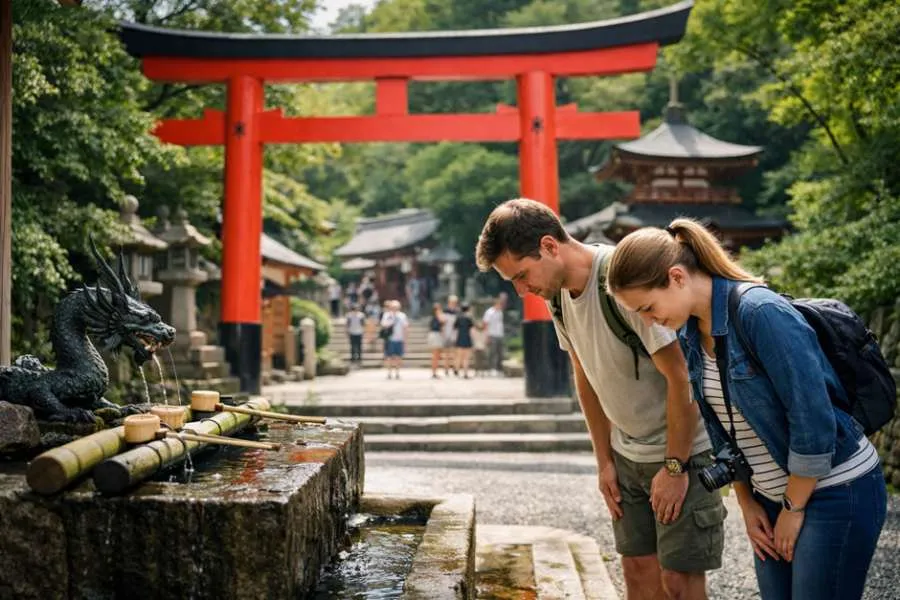
- Besides cleaning your hands, splash water on your face from the fountain. After that, swish water through your mouth. This happens right before you step inside.
- Look out for signs that say no pictures allowed.
- Bending at the waist shows care during prayer. A quiet nod before placing gifts matters just as much.
Tip: Picture yourself at Kyoto’s Fushimi Inari Shrine. Snap photos without getting in people's way—move off to the side first. Climb only where allowed, never on sacred posts or gates.
6. Dining Etiquette
Japanese dining has rules that may seem unusual:
- Service charge already covered, no extra tip needed.
- Chopsticks? Standing them upright in a bowl of rice is off-limits. Waving them around to point at someone isn’t done either. Moving morsels directly from one pair to another is never seen as okay. Eating customs matter, even with small sticks.
- A loud sip while eating pasta means you like it. How someone eats can speak louder than words ever could.
- Avoid walking while eating street food.
Tip: When you’re at a café or eating ramen, stay aware of your bag, keep it close. Extra seats aren’t yours to hold. Sit only where needed. Others might need space too. Simple moves make things smoother. Think about how you take up room. It matters more than you may believe.
7. Handling Money
Few places outside cities accept cards, most transactions happen with bills and coins. Rural spots, tiny stores, and even sacred sites stick to paper money. Cash rules where digital trails fade.
- Bills slide more easily when placed on a tray first. A flat surface keeps everything steady during exchange.
- Fingers sort change with care. Paper money gets stacked straight. Coins line up without clutter. Cash stays tidy through small efforts.
- In cities, you can often pay with plastic—though that does not work in every spot.
Tip: A spare pocket for coins helps when ticket boxes need precise amounts.
8. Personal Space and Queuing
Most folks in Japan prefer a bit of room between them and others. Staying at a slight distance from someone you do not know is common sense there.
- Stand quiet while others move ahead.
- Watch where you stand when taking pictures. Stay clear of paths people use. Blocking them causes trouble without meaning to.
Tip: When cherry trees bloom, move one behind another on trails, pausing if older guests or families need space.
Conclusion: Travel Respectfully, Experience Fully
Respect grows when visitors follow local customs. Bowing slightly, leaving footwear behind at entrances, that sort of thing matters here. Lines form without pushing; people wait their turn without fuss. Sacred places ask for quiet steps and lowered voices.
Curiosity works well, so long as it comes gently. Mindful actions open doors words cannot reach. Travel feels smoother when you notice how others move through the day. Small gestures often speak loudest. Memories stick better when they are built on awareness. The country responds to those who pay attention.
Share: