
Where to watch tonight’s solar eclipse in the Canary Islands – with FREE viewing glasses
The Canary Islands are preparing for one of the most eagerly anticipated astronomical events in years, with eight official viewing points being set up across the islands for Wednesday’s solar eclipse, where special approved viewing glasses will be handed out free of charge.
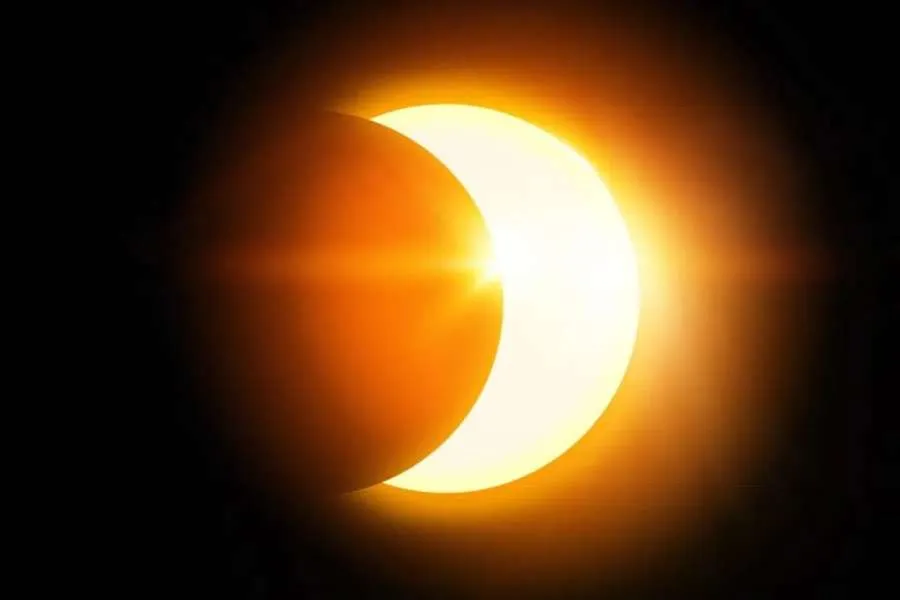
Although the Canary Islands are outside the path of totality for the solar eclipse on 12th August, the spectacle will still be impressive, with the Moon expected to cover up to 77% of the Sun depending on where you are watching from.
The Elder Museum of Science and Technology, together with the Canary Islands Government’s Department of Tourism and Employment, is setting up eight specially designated ‘Cosmic Watchpoints’, one on each inhabited island.
They will offer a safe way to enjoy the eclipse, with astronomy experts, specially adapted solar telescopes, information about the phenomenon and free approved eclipse glasses.
Where are the official viewing points?
The locations have been deliberately chosen to provide good views towards the western horizon, as the eclipse will take place during the final hours of the afternoon.
The eight official locations are:
- Tenerife: Avenida del Emigrante, Playa de San Juan, Guía de Isora.
- Gran Canaria: Calle Doctor Domingo Hernández Guerra, Tejeda.
- Lanzarote: La Santa seafront promenade, Tinajo.
- Fuerteventura: El Tostón Castle, El Cotillo, La Oliva.
- La Graciosa: Plaza del Puerto de Caleta de Sebo, Teguise.
- La Gomera: Plaza de San Pedro, Valle Gran Rey.
- La Palma: Los Tarajales beach, Tazacorte.
- El Hierro: La Maceta, La Frontera.
The eclipse can, of course, be seen from other parts of the Canary Islands, weather permitting. However, anyone choosing their own viewing location should make sure they have an unobstructed view towards the western horizon, without mountains, buildings or other obstacles blocking the Sun as it gets lower in the sky.
What time is the eclipse in the Canary Islands?
Activities at the eight official viewing points will take place between 6:30pm and 9:30pm on Wednesday, 12th August.
The maximum eclipse visible from the Canary Islands is expected at approximately 7:55pm, although the exact timing and percentage of the Sun covered will vary slightly depending on the island and viewing location.
At its maximum, the Moon will obscure approximately 77% of the Sun from the best locations in the Archipelago.
Unlike areas of mainland Spain and the Balearic Islands that lie within the path of totality, it will not become completely dark in the Canary Islands.
However, there should be a noticeable reduction in daylight as the Moon progressively moves across the Sun.
The partial eclipse will last for close to two hours, giving people plenty of opportunity to watch its different stages.
Free eclipse glasses available
Scientific experts will be present at each of the eight official locations to explain what is happening and answer questions about the movement of the Sun, Earth and Moon.
Special solar telescopes fitted with protective filters will also be available, allowing people to see the eclipse in greater detail without exposing their eyes to dangerous solar radiation.
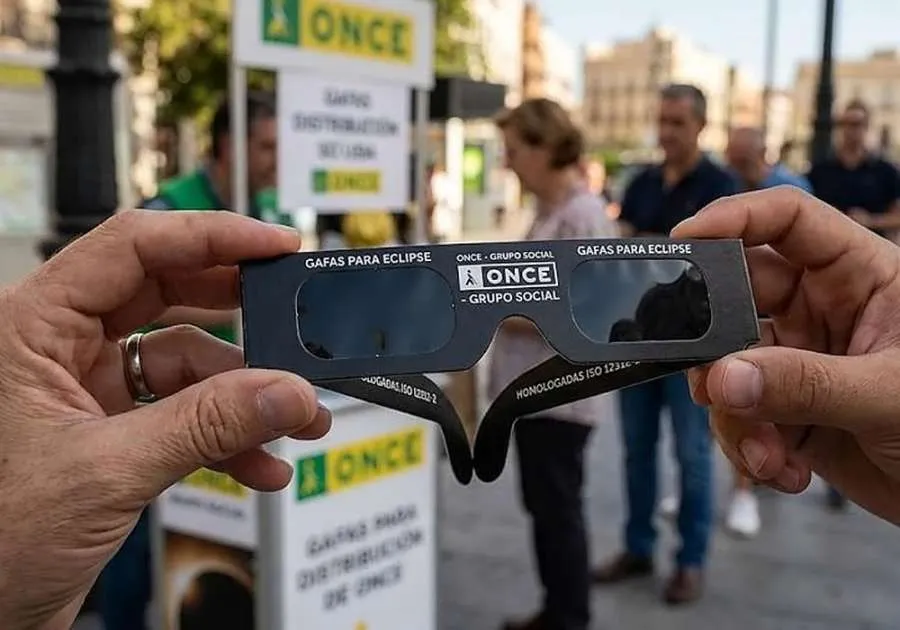
Most importantly, organisers will distribute approved solar eclipse glasses free of charge, while stocks last.
Around two million pairs of eclipse glasses are expected to be distributed across Spain, including approximately 125,000 in the Canary Islands through around 1,200 ONCE lottery vendors.
WARNING: Don't look directly at the Sun
Anyone planning to watch Wednesday’s eclipse is being reminded that looking directly at the Sun without the correct protection can cause serious and potentially permanent damage to your eyesight.
Ordinary sunglasses are NOT sufficient, regardless of how dark they are.
Smoked glass, X-ray film, photographic negatives, homemade filters and looking through the screen of a mobile phone or camera are also not safe methods of viewing the eclipse.
Only glasses specifically approved for direct solar observation should be used.
Experts recommend checking eclipse glasses carefully for scratches, holes or other damage before using them, and putting them on before looking towards the Sun.
People should look away from the Sun before removing their glasses and children should be closely supervised.
Binoculars, telescopes and cameras should never be pointed directly at the Sun unless they are fitted with the correct professional solar filters, as the concentrated sunlight can cause serious eye damage.
Canary Islands prepare for more spectacular eclipses
Wednesday’s event is just the beginning of an unusual period of major astronomical events visible from Spain and the Canary Islands.
Another major solar eclipse will take place on 2nd August 2027, with particularly favourable conditions for totality across parts of southern mainland Spain and North Africa.
This will be followed by an annular solar eclipse in January 2028.
The Elder Museum is already working on educational activities surrounding these future events, as the Canary Islands continue to strengthen their reputation as an international destination for astronomy, stargazing and astro-tourism.
Share: