
Tenerife Motor Circuit faces new setback as BOC confirms key licence is to be cancelled
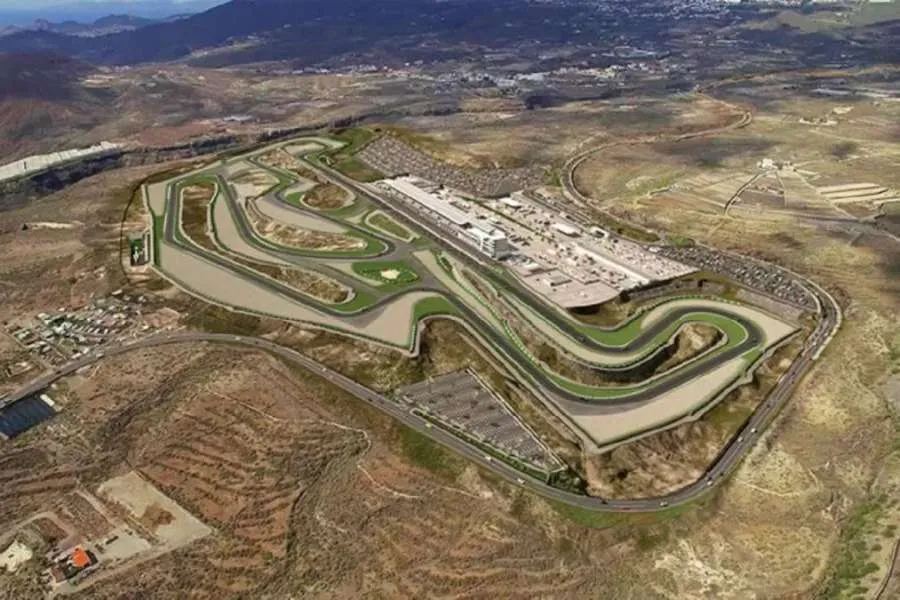
The construction of the long-awaited Tenerife Motor Circuit has encountered yet another obstacle. The Island Water Council has begun proceedings to annul a licence previously granted to the Cabildo for works associated with the project.
According to an announcement published in Friday’s BOC (Official Bulletin of the Canary Islands), the authorisation has expired because the island’s Roads Department failed to meet the execution deadlines required for the works.
The licence in question concerns interventions in watercourses included in the Project for the Adaptation of the Tenerife International Motor Park to the Flood Defence Plan, located in Granadilla de Abona in the south of the island. The Water Council first issued the permit on 1st December 2014 and extended it twice, most recently on 6th March 2024.
From Monday (26th January), a 20-day public consultation period will open, during which any individual or legal entity may review the file and submit objections.
The Motor Circuit, set to occupy at least 650,000 square metres of land with a projected public cost of 51 million euros, has been dogged by controversy, criticism and legal challenges since its inception. A court ruling issued last November found that the project’s Environmental Impact Statement (EIS) had expired and that construction violated the Canary Islands Law on Protected Species. Following the ruling, the environmental association ATAN requested an immediate halt to all works.
ATAN has filed four separate administrative appeals, corresponding to the four project components into which the Cabildo divided the initiative:
- Earthworks and facilities for temporary grandstands.
- The revised Phase 2 project for the northern access to the Motor Circuit complex.
- The adaptation of the circuit to the Flood Defence Plan
- The revised project for the track itself.
With respect to the Flood Defence Plan, the court sided with ATAN and reiterated that the EIS is no longer valid. The ruling sharply criticised the minor works cited by the Cabildo to justify the document’s continued applicability. The judge stated that those activities were “minimal, insignificant and of little substance”, adding that an EIS approved in 2011 cannot remain valid 12 years later merely because a few limited actions were carried out on site.
As previously reported, these minimal actions consisted of removing protected vegetation and replanting it elsewhere, clearing the proposed track route, conducting archaeological studies and surveys, and excavation works related to drainage systems.
The future of the project is now even more uncertain as legal and administrative pressures continue to mount.
Share: