
Rare Goblin Shark recorded alive for the first time in Canary Islands waters
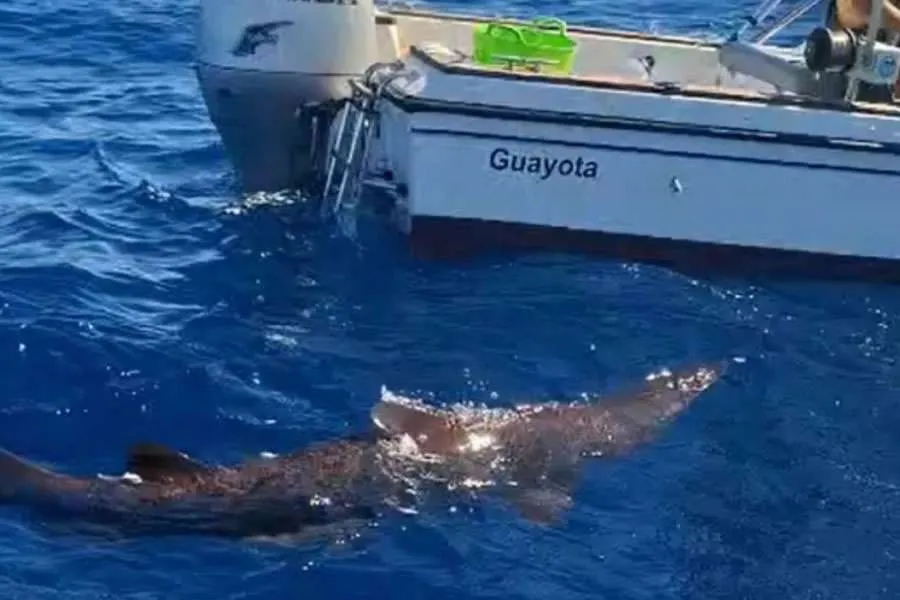
Researchers from the University of La Laguna (ULL) have documented the first live sighting in the Canary Islands of a goblin shark (Mitsukurina owstoni), a deep-sea species so rarely encountered that fewer than 250 specimens have ever been recorded worldwide.
The 2.5-metre shark was observed at a depth of 900 metres, around 9.5 kilometres off the coast of San Cristóbal in Gran Canaria. It is the first confirmed sighting in the Canary Islands and only the second in the wider Macaronesian region.
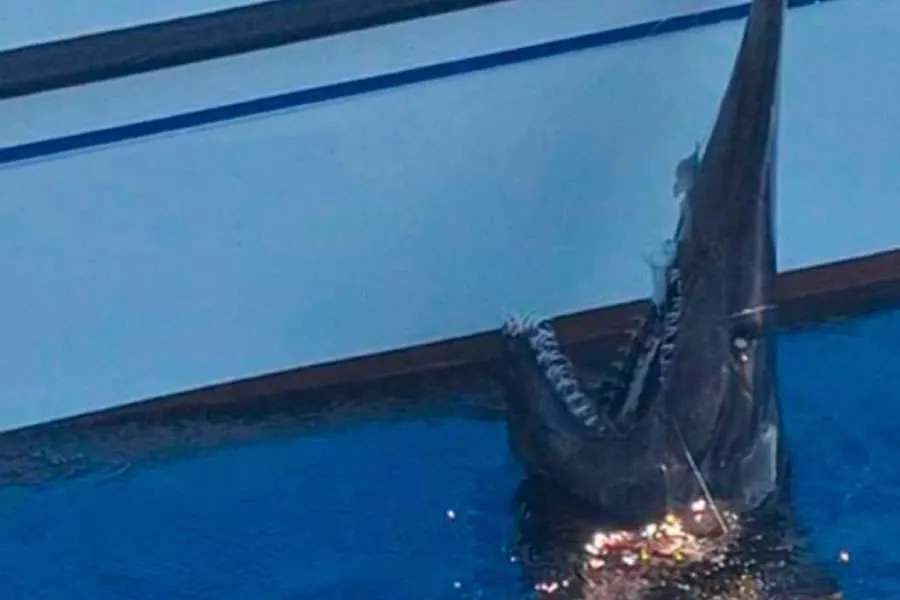
The specimen was accidentally captured on during a recreational fishing trip. After being brought aboard and examined, the animal was released alive. Photographs and video footage taken at the time allowed researchers to document the shark’s distinctive diagnostic features: an elongated, flattened snout; protruding jaws lined with long, sharp teeth; small eyes lacking a nictitating membrane; a soft, flaccid body; two rounded, flexible dorsal fins; and a long tail fin without a lower lobe. The absence of claspers led to a provisional identification as a female.
Goblin sharks are known for their scattered yet wide distribution across tropical and temperate oceans, typically inhabiting depths between 250 and 1,500 metres. In the northeastern Atlantic, they have only occasionally been recorded in Galicia, Madeira, Moroccan waters and near Portugal.
The ULL team highlights the ecological importance of the Canary Islands’ deep-water habitats, which act as refuges for sharks and other elasmobranch species. The lack of bottom-trawling since the 1980s and limited targeted fishing of deep-water sharks have contributed to preserving these fragile populations, although incidental captures with passive gear still occur.
The finding also reinforces evidence of size-based geographic segregation within the species. In the eastern Atlantic, most recorded specimens are juveniles or subadults, while in the western Atlantic adults are more common, patterns that may reflect ecological or reproductive factors not yet fully understood.
Researchers stress that this sighting represents a notable expansion of the species’ known distribution in the Central-Eastern Atlantic and underscores the need for continued exploration and monitoring of the archipelago’s poorly studied deep-sea ecosystems.
Share: