
VIDEO: Swarms of African Locusts spark alert in Lanzarote
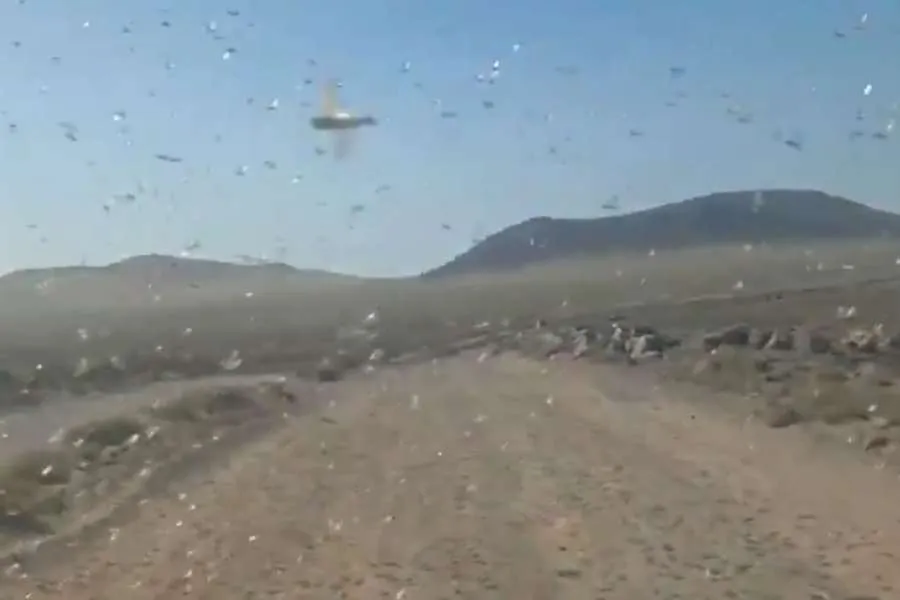
Environmental services in Lanzarote are on high alert after hundreds of African desert locusts arrived on the island, carried by Saharan dust clouds. The insects are believed to have reached the island on strong winds linked to the current episode of calima, which has blanketed the Canaries in dust from the Sahara.
Large specimens have been spotted in Arrecife, while a video released by the island’s emergency consortium shows a sizeable swarm on the road between Caleta de Famara and Playa de San Juan, in the municipality of Teguise.
Earlier this week, the Organización de las Naciones Unidas para la Agricultura y la Alimentación (FAO) warned of significant locust movements between Mauritania and Morocco. The FAO describes the desert locust as “the most destructive migratory pest in the world”.
In recent days, large swarms have also been reported in parts of Western Sahara and southern Morocco, including El Aaiún, Dakhla, Bojador and Tan-Tan.
Risk to crops?
Recent winter rains have left Lanzarote’s countryside unusually green, creating ideal feeding conditions for the insects. If numbers increase, there are concerns that they could pose a threat to crops, particularly vineyards.
The Cabildo de Lanzarote has mobilised its environmental services and will closely monitor developments over the next 48 hours.
Francisco Fabelo, the Cabildo’s Head of Environment, said the coming days will be decisive: “The next two days are key. If these are exhausted adult specimens, they will die and that will be the end of it. But if we see mating behaviour, that would mean they are reproducing. We should know by this afternoon or tomorrow.”
The prospect of reproduction is the main concern, as juvenile locusts are the most voracious and could cause significant damage if they move inland.
Not the first time
Lanzarote experienced a similar invasion in November 2004, when up to two million African locusts reached the island, mainly affecting Yaiza and Haría. Although highly visible and disruptive, they disappeared after several days without causing serious agricultural damage.
For now, officials believe the current swarm may be isolated and could disappear within two or three days. However, monitoring continues, and farmers, particularly wine growers, are watching developments closely.
Share: