
Health Service issues Red Alert as Heatwave Intensifies in the Canary Islands
The Canary Islands Health Service has activated the highest health risk warning for extreme temperatures in parts of the archipelago, with red alerts expected to spread across more areas of Gran Canaria, Tenerife and La Palma over the weekend as the heatwave continues.
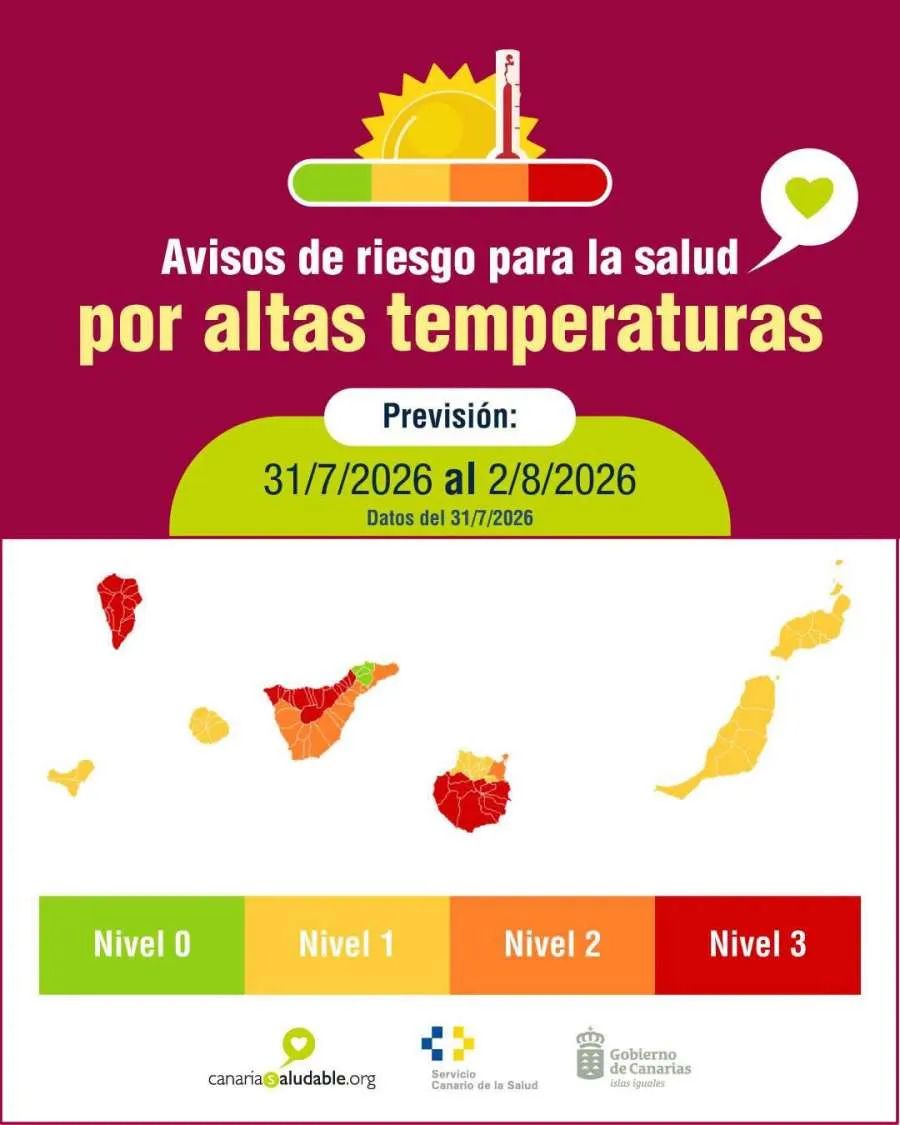
The Canary Islands' Directorate General of Public Health has issued a Level 3 (Red) MeteoSalud alert for Telde and the summit areas of Gran Canaria, warning of an extreme risk to health due to persistent high temperatures.
The Canary Islands Health Service (SCS) is urging residents and visitors in the worst-affected areas to consider cancelling outdoor activities and to stay in cool places whenever possible, including overnight, as temperatures remain exceptionally high.
Authorities have stressed that the MeteoSalud alerts are health warnings, designed to measure the potential impact of heat on people, and should not be confused with the weather warnings issued by Spain's State Meteorological Agency (AEMET), although they are based on forecasts provided by AEMET and the Ministry of Health.
Red alert in Gran Canaria
The red health alert is currently in force on Friday, 31st July, for Telde and the summits of Gran Canaria, which includes Tejeda and Vega de San Mateo.
According to Public Health, this level represents a moderate risk for the general population and a high risk for vulnerable people, particularly those exposed to direct sunlight for prolonged periods.
If the heatwave lasts for more than three consecutive days, the health risk could become extreme for the wider population, not just vulnerable groups.
Health officials expect the red alert to be expanded during the weekend to the east, south and west of Gran Canaria, as well as the north of Tenerife and all three MeteoSalud zones of La Palma – the summit, eastern and western areas.
Orange alerts across much of Tenerife
A Level 2 (Orange) health alert remains active in Las Palmas de Gran Canaria, indicating a mild risk to the general population and a moderate risk for vulnerable people.
On La Palma, orange alerts affect the summit area, including Barlovento, El Paso, Garafía and Puntagorda, as well as the eastern municipalities of Breña Alta, Breña Baja, Puntallana, San Andrés y Sauces, Santa Cruz de La Palma and Villa de Mazo.
In Tenerife, almost the entire island is under an orange health warning, with only a few municipalities in the metropolitan area excluded.
The northern municipalities affected include Buenavista del Norte, Garachico, La Guancha, Icod de los Vinos, La Matanza de Acentejo, La Orotava, Puerto de la Cruz, Los Realejos, San Juan de la Rambla, Santa Úrsula, El Sauzal, Los Silos, El Tanque, La Victoria de Acentejo and Tacoronte.
Orange alerts are also in place for Adeje, Arafo, Arico, Arona, Candelaria, Fasnia, Granadilla de Abona, Guía de Isora, Güímar, San Miguel de Abona, Santiago del Teide, Vilaflor de Chasna, Santa Cruz de Tenerife and El Rosario.
Yellow warnings remain on six islands
A Level 1 (Yellow) alert, indicating a mild risk for vulnerable people, remains in force across all three municipalities of El Hierro – El Pinar, Valverde and La Frontera – as well as throughout Fuerteventura, La Gomera and Lanzarote.
In Gran Canaria, yellow alerts currently cover the northern, eastern, southern and western areas, including municipalities such as Mogán, San Bartolomé de Tirajana, Santa Lucía de Tirajana, Agaete, Arucas, Gáldar, Teror and Valleseco.
On La Palma, the western municipalities of Fuencaliente, Los Llanos de Aridane, Tazacorte and Tijarafe are also under a yellow alert.
Current forecasts suggest that by the weekend, yellow warnings will be limited to Lanzarote, Fuerteventura, northern Gran Canaria and La Gomera.
Calima expected to worsen conditions
Public Health has also warned that calima, or Saharan dust, is expected to affect the islands over the coming days, particularly the eastern islands and higher ground on the mountainous islands.
While no major deterioration in air quality is expected in densely populated coastal areas, the dry, dusty conditions could reduce humidity and make the effects of the heat more severe.
The MeteoSalud system determines its alert levels by comparing forecast maximum temperatures with health thresholds established for each area, while also taking into account the duration of the heat episode.
Who is most at risk?
Health authorities say the groups most vulnerable to extreme heat include:
- Children under four years old.
- Pregnant women.
- People aged over 65.
- Those with cardiovascular, respiratory or kidney conditions, diabetes, high blood pressure or obesity.
- People taking certain medications.
- Those living alone or with limited mobility.
- Outdoor workers and anyone exercising for long periods in the sun.
- Homeless people and those living in poorly ventilated homes.
Recognising heatstroke
Symptoms linked to heat-related illness include:
- Intense thirst.
- Dizziness.
- Weakness.
- Nausea.
- Headaches.
- Muscle cramps.
- Heart palpitations.
More serious symptoms, including fainting, convulsions or loss of consciousness, require immediate medical attention.
The Canary Islands Health Service advises people to drink water regularly, even if they do not feel thirsty, and to avoid alcohol, energy drinks and beverages high in caffeine or sugar.
People are also advised to eat light meals, reduce physical activity and avoid outdoor exercise between 11:00am and 5:00pm.
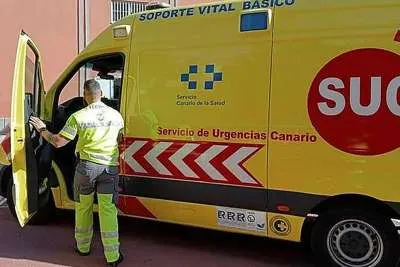
Anyone experiencing weakness, dizziness, fever, blurred vision or loss of consciousness should seek medical advice immediately. In an emergency, call 112.
Share: