
New cash payment rules. How does it affect British residents and visitors in the Canary Islands?
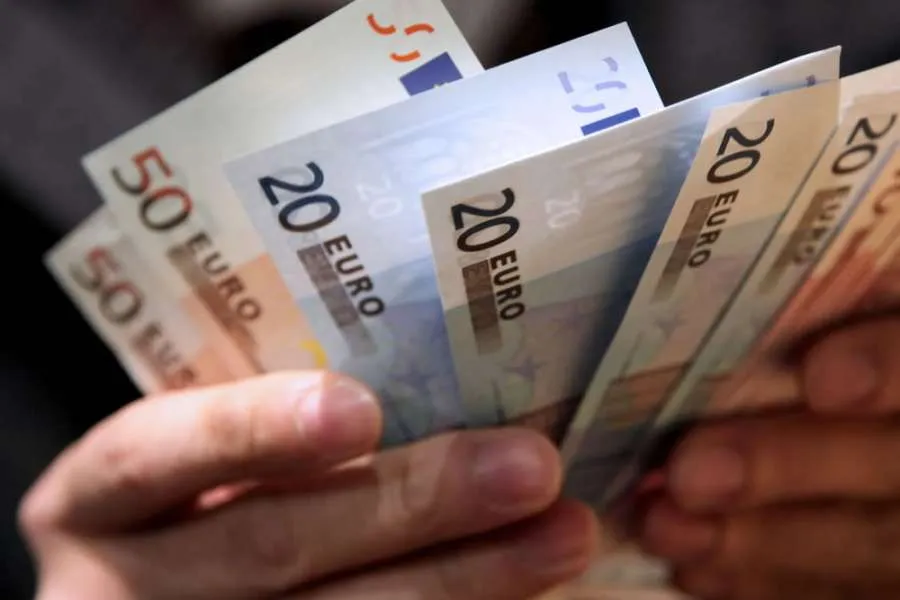
British visitors and residents in the Canary Islands are being reminded of Spain's strict rules on cash payments ahead of new European Union regulations coming into effect in July 2027.
The subject has caused some confusion because the new EU legislation establishes a maximum cash payment of €10,000 across member states. However, that does not mean Spain's current €1,000 limit is being increased to €10,000.
Spain already has considerably stricter legislation, and the new European rules specifically allow countries with lower limits to keep them.
For people living in or visiting Tenerife, Gran Canaria, Lanzarote, Fuerteventura and the other Canary Islands, it is therefore important to understand which limit actually applies.
Spain's €1,000 rule
Under Spanish law, transactions worth €1,000 or more cannot be paid in cash when at least one of the parties is acting as a business or professional.
This means, for example, that someone buying goods costing €1,500 from a shop cannot normally pay the entire bill in cash if they fall under the standard Spanish limit.
The restriction also applies to services supplied by businesses and professionals.
Crucially, splitting a purchase into several smaller cash payments does not provide a way around the restriction. Spanish legislation states that payments relating to the same transaction must be added together when determining whether the threshold has been reached.
The law also requires evidence of non-cash payment to be retained for five years for transactions affected by the restriction.
The important exception for British tourists
There is, however, an important exception which is particularly relevant in tourist destinations such as the Canary Islands.
The cash threshold increases to €10,000 when the person making the payment is a private individual who can prove that their tax domicile is outside Spain and they are not acting as a business or professional.
This means a British holidaymaker whose tax domicile remains in the UK could potentially make a cash payment above €1,000 to a Canary Islands business, provided the transaction remains below the €10,000 threshold and the other legal conditions are satisfied.
But nationality itself is not the deciding factor. A British passport does not automatically give someone access to the higher limit.
For British nationals permanently living in the Canary Islands, the key question is where they have their tax domicile.
A British person whose tax domicile is in Spain is subject to the standard €1,000 threshold in transactions covered by the legislation.
Similarly, simply describing yourself as a tourist or non-resident does not replace the legal requirement to demonstrate that your tax domicile is outside Spain.
What changes in July 2027?
The confusion has arisen because EU Regulation 2024/1624 introduces a maximum €10,000 cash-payment limit across the European Union from 10th July 2027 as part of strengthened measures against money laundering and terrorist financing.
The regulation covers payments for goods and services and also prevents people circumventing the ceiling by dividing a transaction into apparently linked payments.
However, the legislation expressly allows individual EU countries to impose lower limits.
It goes further by stating that where national limits below €10,000 already exist, those limits will continue to apply.
Consequently, Spain's €1,000 restriction is not automatically replaced by the new European ceiling.
Why this matters in the Canary Islands
The distinction has particular relevance here because the Canary Islands receive millions of international tourists each year, including a very large British and Irish market.
Visitors may use cash to pay for accommodation extras, electronics, jewellery, furniture, vehicle-related purchases, leisure activities or other higher-value goods and services.
The higher €10,000 threshold for qualifying people with tax domicile outside Spain can therefore make a significant difference.
It is equally relevant to foreign property owners who spend part of the year in the islands. They should not assume that owning property in the Canaries either automatically qualifies or disqualifies them from the exception: the legislation specifically bases it on the payer's tax domicile outside Spain and their status as a private individual rather than a business or professional.
Penalties can be substantial
Ignoring the cash-payment restriction can also be expensive. Spanish legislation provides for a financial penalty calculated at 25% of the amount paid in cash that forms the basis of the infringement, subject to the applicable rules and possible reductions.
For larger purchases, that can turn what appears to be a convenient cash payment into a costly mistake.
The practical message is therefore straightforward: the EU's €10,000 ceiling next year should not be interpreted as Spain relaxing its cash rules.
For most transactions involving a business or professional in the Canary Islands, Spain's €1,000 threshold remains the figure to remember.
The €10,000 exception is important — particularly for British and other international visitors — but only where the payer can demonstrate that their tax domicile is outside Spain and they are acting as a private individual.
Share: