

Landlords in the Canary Islands face paying a year's rent if they don't renew tenancies
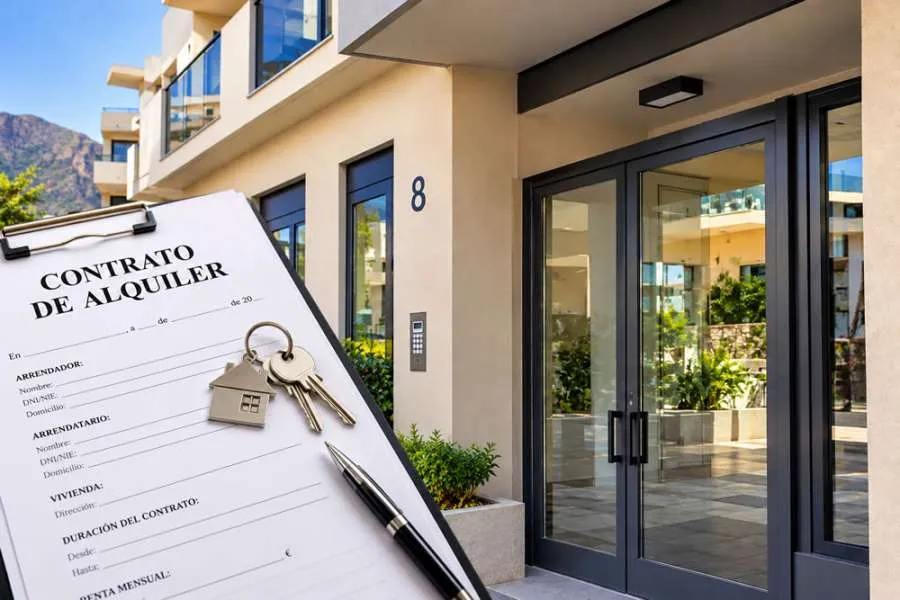
Landlords across Spain, including the Canary Islands, could have to pay tenants compensation equivalent to at least 12 months' rent if they decide not to renew a qualifying rental contract under major new housing rules published in the BOE today.
The measure forms part of Royal Decree-Law 27/2026, which changes Spain's Urban Tenancies Act (LAU) and introduces significantly stronger protections for people renting their main home.
The new rules come into force on Friday 2nd October, although the decree must still be validated by the Spanish parliament.
Contracts could automatically renew for another five years
One of the biggest changes concerns what happens when a standard long-term rental contract reaches the end of its minimum duration.
Once a tenancy has lasted at least five years, or seven years when the landlord is a company, it will automatically renew for another five or seven-year period unless either the landlord or tenant gives the required notice.
Previously, these extensions generally operated annually.
Landlords wanting to end the tenancy must now give at least six months' notice, while tenants must provide at least two months.
If neither side gives notice, another five or seven-year period begins automatically.
Landlords could face substantial compensation
The most significant financial change affects landlords who decide they do not want to renew.
When a landlord validly gives notice to end a qualifying tenancy, they will generally have to compensate the tenant by an amount equivalent to at least 12 months' rent for a comparable property.
Where possible, this will be calculated using Spain's official rental-price reference system.
There is also a second minimum safeguard: compensation cannot be less than one month's rent for every year the tenant has lived in the property.
This means that in some circumstances the compensation could exceed the equivalent of one year's rent.
Payment will normally have to be made when the tenant hands back the property.
There are important exceptions
However, the rule does not mean every landlord ending every tenancy will automatically have to pay a year's rent.
Several exceptions are included.
A private landlord will not normally have to pay compensation when they genuinely need the property as a permanent home for themselves, certain close relatives, or their spouse following separation, divorce or annulment.
However, if the stated person has not moved into the property within three months, except in cases of force majeure, the former tenant can become entitled to compensation.
There are also exceptions when a tenant has not actually lived in the property for more than six months during the previous year without a justified reason, or owns another suitable home in the same municipality which they can occupy.
Compensation can also be avoided if the landlord and tenant agree to a new qualifying rental contract.
Similarly, a landlord can make a formal offer allowing the tenant to remain in the same property under a new contract meeting the conditions established by law. If the tenant rejects a qualifying offer, the compensation requirement may not apply.
Selling the property doesn't necessarily remove the obligation
Another significant provision affects landlords considering selling a rented property.
The decree states that the sale of the home does not automatically remove the tenant's right to compensation.
Where the buyer takes over the legal position of the landlord, they may also inherit the compensation obligation, subject to the exceptions contained in the legislation.
Existing rental contracts can also be affected
Crucially, the changes are not limited to rental agreements signed from now onwards.
The new system can apply to existing main-home rental contracts when their relevant expiry date falls after the legislation comes into force.
There are transitional protections.
If a contract has less than six months remaining when the new rules take effect, the landlord can still give four months' notice rather than the new six-month period.
Notices to end tenancies that were validly issued before the new legislation takes effect remain valid and do not trigger the new compensation requirement.
Contracts already operating within an extension under the previous rules will generally continue under those rules until that extension ends.
Extra protection for vulnerable tenants
The decree also retains additional protections for tenants considered socially or economically vulnerable.
In qualifying circumstances, tenants can request an extraordinary extension of up to one year. Where the landlord is legally classified as a large property owner, accepting that extension can become compulsory unless a new tenancy agreement has been reached.
Separate enhanced protections continue to apply in officially declared pressured housing-market areas.
Applies in the Canary Islands
The changes are national legislation and therefore apply in the Canary Islands in the same way as the rest of Spain.
That makes the measure particularly relevant to both tenants and property owners in the islands, including foreign owners who rent properties as tenants' permanent homes.
However, these provisions concern main residential tenancies governed by Spain's Urban Tenancies Act. They should not be confused with the separate rules governing holiday lets and short-term tourist accommodation.
The decree takes effect on 2nd October 2026, but, as a Royal Decree-Law, it must subsequently be approved by Congress to remain in force.
Share: