
Can I be fined for not having a V16 Warning Beacon?

Since the start of the year, thousands of drivers across the Canary Islands have been asking the same question every time they get behind the wheel: is the V16 warning beacon now compulsory? With Christmas over and daily traffic increasing on all islands, the confusion is understandable.
The answer is yes. The V16 warning beacon is now the only legally accepted roadside hazard signalling device, including in the Canary Islands. However, how the rule includes important nuances during the first few months that drivers should be aware of to avoid unnecessary fines.
Goodbye to warning triangles
From 1st January, traditional reflective warning triangles are no longer valid anywhere in Spain. The Dirección General de Tráfico (DGT) has officially replaced them with the V16 beacon, a flashing light that allows drivers to signal a breakdown or accident without leaving the vehicle.
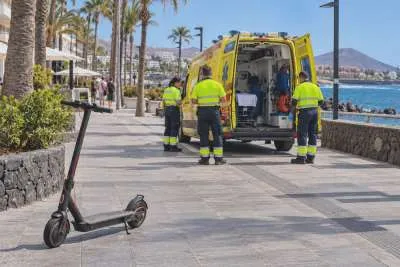
This change is particularly significant in the Canary Islands, where many roads have narrow hard shoulders, sharp bends or rapidly changing weather conditions. These factors increase the risk of being hit by passing traffic when stepping out of the car to place warning triangles.
Will drivers be fined immediately?
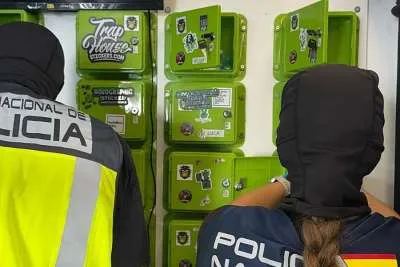
Failing to carry a V16 beacon can result in a fine of up to €80. However, both the police and the Guardia Civil are expected to apply a “reasonable grace period” during the initial months, a position confirmed by the DGT itself.
Spain’s Interior Minister, Fernando Grande-Marlaska, has publicly supported the introduction of the V16 beacon, describing it as “essential”. The figures behind the decision are stark: more than 100 people were killed in Spain last year after being knocked over while outside their vehicles, many of them placing warning triangles. On islands such as Tenerife and Gran Canaria, where traffic density is high, the risk is even greater.
What should drivers in the Canary Islands do?
Despite the temporary flexibility, the advice from authorities is clear: do not delay. There are nearly two million vehicles on Canary Islands' roads, and while the transition to the new system will be gradual, it is unavoidable.
The DGT has acknowledged that it does not yet have exact figures on how many vehicles are already equipped with the V16 beacon. What is certain is that the regulation is already in force. The grace period exists, but it will not last forever.
Share: