
Gran Canaria wildfire stabilised after residents evacuated from their homes
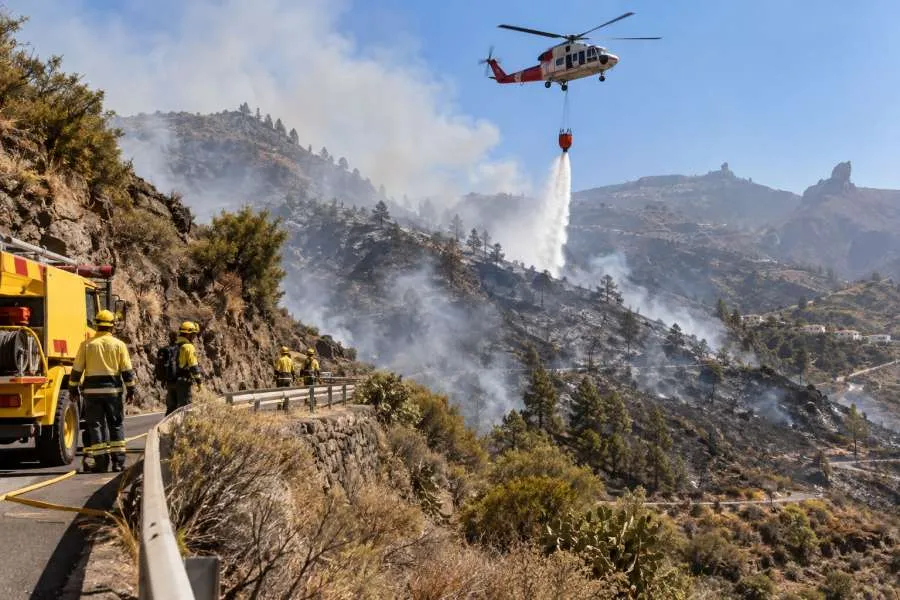
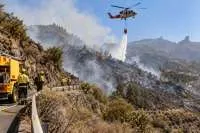
The wildfire that broke out yesterday (Monday) near Cazadores in Telde, Gran Canaria, has been stabilised following a major firefighting operation involving five helicopters and dozens of emergency personnel.
The Cabildo de Gran Canaria have confirmed the positive development several hours of concern that the fire, initially described as having a high potential to spread, could advance towards the island's summit area.
Residents were preventively evacuated from homes as the emergency developed, including people in the Cuevas Blancas area, while elderly residents and animals were also moved away from areas considered potentially at risk.
Despite the evacuations and scale of the emergency response, authorities have confirmed that no injuries have been reported and there has been no reported damage to animals or property.
Firefighters remain at the scene following the stabilisation of the blaze and are continuing operations to secure the affected area.
Five helicopters deployed
The fire broke out shortly before 1:00pm on Monday in the Cazadores area of Telde and initially generated considerable concern because of the combination of difficult terrain and adverse weather conditions.
The first response included ground crews and two helicopters, but the aerial operation was subsequently reinforced as authorities attempted to stop the fire spreading towards higher areas of Gran Canaria.
A total of five helicopters were ultimately involved alongside ground crews, including firefighters from Telde and San Mateo.
The rapid intervention appears to have been decisive in preventing the wildfire from developing into a considerably larger incident.
Cabildo president Antonio Morales said the speed of the response had helped prevent a greater expansion of the fire.
Residents evacuated as precaution
As the operation intensified, authorities ordered preventive evacuations from areas potentially threatened by the fire.
Residents were evacuated from Cuevas Blancas, while people living in other nearby communities were instructed to remain alert to official communications in case further measures became necessary.
Authorities were also closely monitoring the El Saucillo area of San Mateo.
Residents around Cazadores, El Moreno and La Solana were among those advised to follow instructions from emergency services.
The evacuations represented a significant escalation from the initial stages of the emergency, when no homes had been evacuated.
However, the subsequent stabilisation of the fire considerably improves the situation for the affected communities.
Roads remain affected
The emergency operation also resulted in road closures around the fire.
The GC-120 and GC-130 were closed to traffic to give firefighters and other emergency resources unrestricted access and to prevent members of the public entering the affected area.
Drivers are being advised to continue respecting road closures and instructions from emergency personnel while crews remain on the ground.
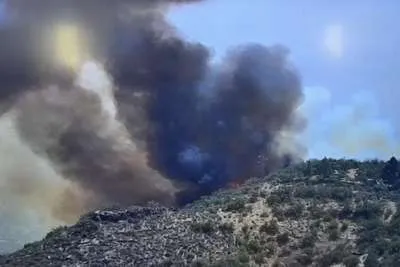
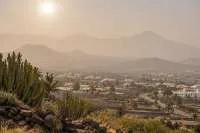
The fire produced a substantial column of smoke that could be seen from several parts of the southeast of Gran Canaria during Monday afternoon.
Fire stabilised, but not extinguished
Importantly, declaring a wildfire stabilised does not mean that it has been fully extinguished.
Stabilisation indicates that the fire is evolving within the expected control lines and is no longer spreading freely in the way authorities feared earlier in the afternoon.
Firefighters must now continue working on the perimeter and any remaining active areas before the incident can progress towards being officially declared controlled and, eventually, extinguished.
The distinction is particularly important because Gran Canaria is currently experiencing difficult conditions for wildfire prevention.
High temperatures and calima are affecting the island, while the Canary Islands Government has activated measures because of the increased wildfire risk.
Temperatures are forecast to increase further in parts of Gran Canaria on Tuesday, particularly across the southern half of the island.
Emergency crews will therefore remain vigilant for any possible reactivation.
Share: