
How 3D prototyping can help Carnival creators test big ideas before building
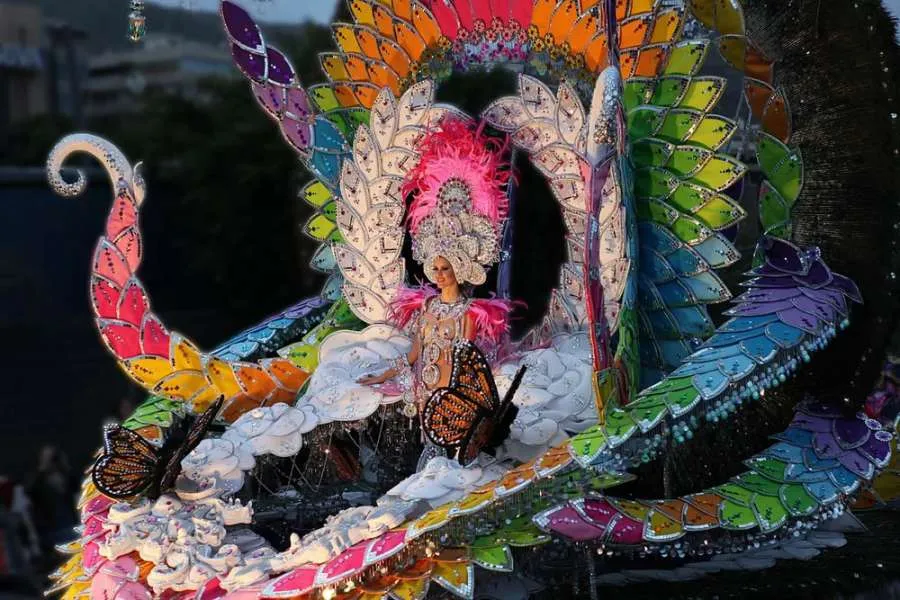
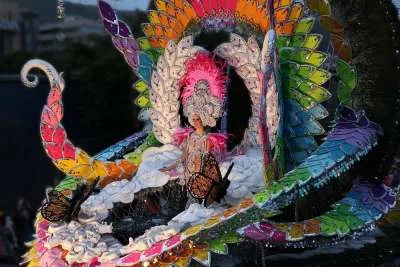
Carnival design thrives on excess. A successful float, stage element or queen’s costume may combine towering forms, saturated colour, reflective surfaces and moving details that must remain readable in a crowded venue.
Behind that spectacle is a long period of practical decision-making. Designers must translate an ambitious drawing into something that can be built, transported, worn or moved along a parade route. Materials have to be ordered, components assigned to different makers and enough time preserved for assembly and rehearsal.
The official Santa Cruz Carnival programme shows how many competitions, galas and public events must come together within a single season. For the creative teams involved, testing a design early can prevent a visual idea from becoming a costly construction problem later.
A three-dimensional prototype can support that early testing. It gives collaborators a shared object to examine before foam, fabric, metal, feathers, lighting and decorative finishes are committed to the final build.
Carnival Design Begins Long Before the Parade
A front-facing sketch can establish theme, colour and composition, but a carnival creation is rarely experienced only from the front.
A float is viewed from pavements, balconies and moving positions along its route. A large costume turns with its performer. A stage prop may appear against several lighting scenes and beside dozens of dancers. Details that look balanced in an illustration can disappear when the object moves or is seen from the side.
These problems are difficult to solve after construction has begun. Enlarging one decorative element may require changes to its support. Moving a feature may affect lighting or block a performer. An adjustment that seems small on paper can create work for several people.
Digital prototyping allows teams to explore those relationships while the design is still flexible. It does not eliminate the need for making skills; it helps direct those skills toward a version that has already survived basic visual testing.
What a 3D Prototype Can Reveal
The purpose of an early model is not to reproduce every sequin or painted surface. It is to test the decisions that influence the overall effect.
A creative team might use a prototype to examine:
- Whether the main silhouette remains clear from the front, side and rear
- Whether decorative layers hide one another
- How the design relates to a performer’s body or a float platform
- Whether the visual focus is obvious from a distance
- Where lights, signs or moving parts might be positioned
- Whether large forms could interfere with entrances or turning space
- How the design changes when viewed from a lower or higher angle
The model should be detailed enough to answer these questions without creating the illusion that the design is ready to build. At this stage, speed and clarity can be more useful than perfect surfaces.
From a Sketch to a Rotatable Concept
Many carnival ideas begin as hand drawings or digital illustrations. Rebuilding every early proposal manually in 3D may take more time than a small team can justify, especially when several variations are still being considered.
A tool such as Meshy AI can turn an image into an initial three-dimensional interpretation. The result gives designers something they can rotate and inspect, but it should be treated as a concept asset rather than a fabrication model.
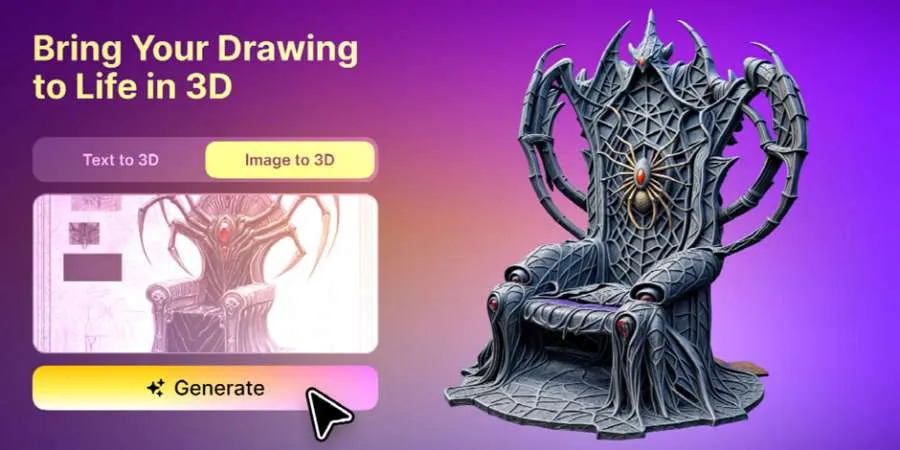
A single image cannot reveal the back, underside or internal supports. Those areas must be inferred, so the generated model may contain shapes that were never part of the artist’s intention. Thin decorations can become too thick, separate elements may merge, and painted patterns may appear as physical geometry. When the designer has already drawn the front, side and back, Meshy's Multi-view option, available on paid plans, accepts up to four images of the same object, which leaves less of the shape to guesswork.
The designer must compare the model with the original sketch and decide which parts are useful, which need correction and which should be ignored.
A Volcano-and-Ocean Float
Imagine a float built around two familiar Canarian visual forces: volcanic rock and the Atlantic Ocean. The sketch shows a central volcanic form surrounded by sweeping blue waves, with dancers positioned between them.
The front view looks dramatic. Once the concept is rotated, however, the waves appear flat from the side. The central structure hides two performers when viewed from one corner, while a decorative crest at the rear competes with the main focal point.
The team can now test several changes. The waves could be staggered to create depth, the centre could be raised slightly, and the rear crest could be simplified. These decisions can be compared without cutting material or rebuilding a support frame.
The prototype may also confirm that some features should remain unchanged. A side element that seemed unnecessary in the sketch might prove essential when the float is viewed along a curved section of the route.
Test the Distance, Not Just the Detail
Carnival creations are often photographed close up, but audiences may first see them from far away. A digital model should therefore be reviewed at several simulated distances.
Fine decoration can enrich a costume when it is stationary, yet disappear during a parade. Larger colour blocks, stronger contrast and a recognisable outline usually communicate more clearly across a crowded venue.
This does not mean removing craftsmanship. It means understanding which details carry the concept from a distance and which reward a closer look.
Digital Variations Can Reduce Wasteful Experiments
Physical samples remain essential, but not every design question needs a full-size test.
A team can compare different proportions, colour placements and decorative arrangements digitally before purchasing large quantities of material. If three crown shapes are being considered for a costume, rough models can show how each affects the overall silhouette. If a float includes multiple figures, their spacing can be reviewed before the bases are built.
Digital variation is particularly useful when sponsors, choreographers, makers and performers must approve the same design. Rather than interpreting separate sketches, they can discuss a common view and identify the exact component they want to change.
Once the direction is agreed, the team can spend its physical prototyping budget on the questions that genuinely require real materials.
What a Digital Model Cannot Prove
A visually convincing model may still be impossible or unsafe to construct. Digital prototyping must therefore remain separate from technical validation.
It cannot confirm the real weight or centre of gravity of a structure. It cannot prove that a frame will resist wind, that a costume will remain comfortable under stage lights, or that a vehicle can turn and brake safely along the intended route.
Material strength, flame resistance, electrical systems, fastening methods and emergency removal procedures all require appropriate expertise and physical testing.
Wearable designs present additional concerns. A costume that appears balanced on a digital figure may place excessive pressure on the performer’s shoulders or restrict breathing and visibility. Full-scale fittings, movement tests and rehearsals remain indispensable.
The more spectacular the design, the more important it is to distinguish visual approval from safety approval.
Technology Should Support Carnival Craft, Not Flatten It
Carnival is not simply a collection of large objects. Its identity comes from local humour, music, performance, competition and the knowledge passed through creative teams.
Generative tools may accelerate the earliest version of a shape, but they cannot decide whether a design feels rooted in the Canaries or merely looks dramatic. They may also introduce generic motifs or combine references in culturally inaccurate ways.
Human creators must remain responsible for the theme, symbolism and visual language. Local makers understand how materials behave, performers know what movement demands, and experienced teams recognise which ambitious ideas can survive the energy of a live event.
The strongest use of 3D is therefore collaborative. It gives people another way to communicate while leaving authorship and judgement with the team.
Frequently Asked Questions
Can a digital model replace a physical prototype?
No. It can reduce unnecessary early experiments, but physical prototypes are still required to test materials, weight, comfort, movement, construction and safety.
Can a hand-drawn carnival sketch become a 3D concept?
It can provide a starting reference, particularly when the main silhouette is clear. Because one drawing does not show every side, the resulting model must be checked and corrected by the designer.
Which carnival elements benefit most from early 3D testing?
Large silhouettes, layered decorations, float figures, headpieces and stage props can benefit because their proportions and visibility change significantly with viewing angle and distance.
Test the Spectacle Before Building It
Carnival will always depend on people who can turn imagination into physical spectacle. Digital tools do not replace that achievement. They can, however, give those creators more opportunities to question an idea before time and materials make revisions difficult.
A useful 3D prototype reveals where forms collide, where a focal point disappears and where a design becomes stronger from an unexpected angle. It helps a team arrive at the workshop with clearer decisions.
The final magic still belongs to the designers, builders and performers who bring the creation into the street.
Share: