
EU to pay residents for recycling old clothes in new Smart Bin scheme
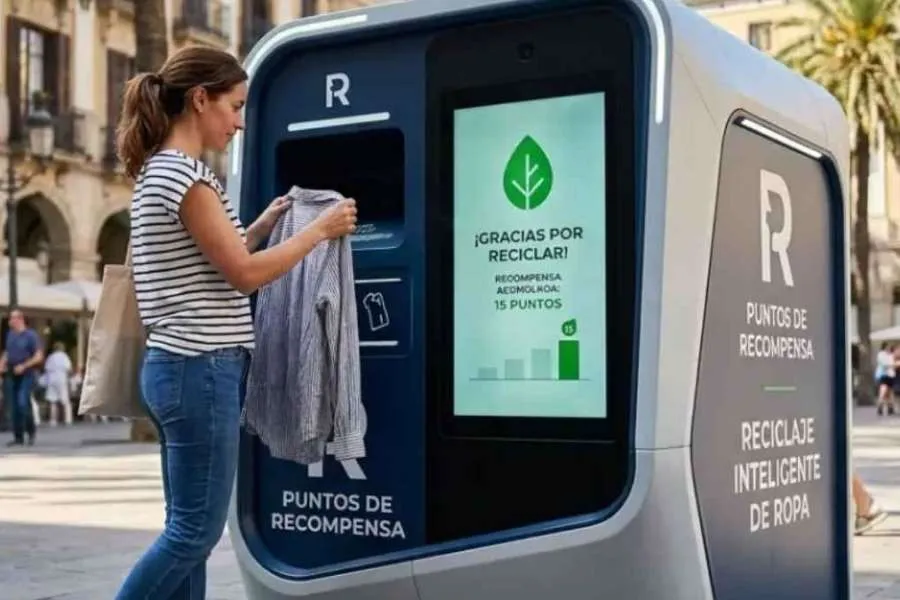
People in Spain, including the Canary Islands, could soon be paid for recycling their old clothes under a new European Union pilot project launching later in 2026.
The initiative, known as TexMat, will introduce smart textile recycling bins capable of analysing used clothing and offering financial rewards based on the quality and condition of the items deposited.
The project is being funded through the EU’s Horizon Europe programme with an investment of €6.25 million, and Spain has been selected as one of the first countries to test the system.
According to the report, two pilot collection points will initially be installed in Spain — one in an urban area and another in a rural location — alongside a parallel trial in Finland.
How the smart recycling bins will work
Users will place unwanted clothing into the container, where automated technology will scan the textile to assess its condition, quality and fabric composition.
An algorithm will then decide whether the garment is suitable for resale in the second-hand market or whether it should be sent for fibre recycling. Based on that assessment, users will receive an instant financial reward.
The exact amount people will receive has not yet been confirmed, but organisers say payments will vary depending on the value and reusability of the clothing provided.
Ece Şanlı, a circular economy specialist with Humana Fundación Pueblo para Pueblo, said the incentive is expected to take the form of direct financial compensation.
EU targets growing textile waste problem
The scheme comes amid growing concern over textile waste across Europe.
In 2022, the European Union generated almost 7 million tonnes of textile waste, roughly 16 kilos per person, but only a small proportion was separately collected for recycling or reuse.
In Spain, the situation is considered even worse, with more than 20 kilos of textile waste generated per person each year while only 2.1 kilos are selectively collected for recycling.
Environmental groups have welcomed the project but warned it will not solve the wider problems created by fast fashion and poor-quality synthetic clothing.
The initiative forms part of wider EU reforms under the new European Union Directive 2025/1892, which introduces “extended producer responsibility”, forcing clothing companies to help finance the collection, recycling and disposal of textile waste.
The EU is also developing a digital product passport system, allowing consumers and recycling centres to scan clothing labels or QR codes to access information about a garment’s origin, materials and environmental impact throughout its lifespan.
Share: