

DGT confirms changes to traffic lights from October - here’s what drivers need to know
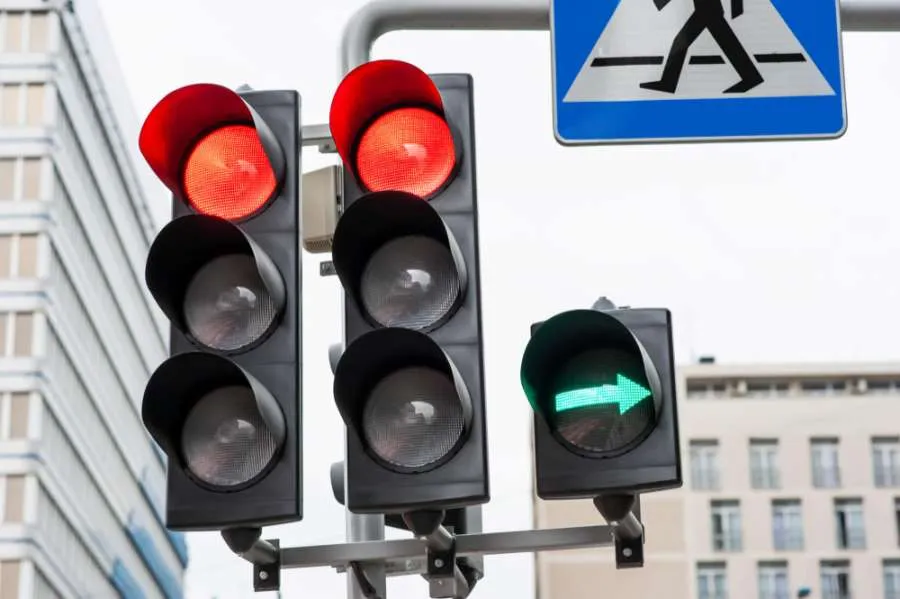
Drivers in the Canary Islands and across Spain will see a change to traffic light sequences from 1st October 2026, following an amendment to Spain's General Traffic Regulations.
The change, confirmed by Spain's Directorate-General for Traffic (DGT) and the Ministry of the Interior, affects the way vehicle traffic lights operate alongside pedestrian signals at controlled crossings.
Importantly, the familiar red, amber and green lights are not being replaced. Instead, the change concerns when certain lights can be displayed in relation to pedestrian signals.
What is changing?
From 1st October, a flashing amber light for vehicles will no longer be allowed to operate at the same time as a fixed green pedestrian light at traffic-light-controlled crossings.
In addition, a flashing amber signal for vehicles will have to be preceded by a fixed red light.
The measure is included in Royal Decree 518/2026 and is designed to make it clearer to motorists and pedestrians exactly who has priority at crossings.
Under the current system, drivers can encounter situations where they are shown a flashing amber light while pedestrians simultaneously have a green light to cross.
Although drivers should proceed with caution and give way where necessary, traffic authorities believe the combination can cause uncertainty and different interpretations among road users.
The new sequence is intended to remove that ambiguity.
What does it mean for drivers in the Canary Islands?
For motorists in Tenerife, Gran Canaria, Lanzarote, Fuerteventura and the other islands, there is no need to learn an entirely new traffic-light system.
Red will still mean stop, green will still permit vehicles to proceed when safe, and amber will continue to warn drivers accordingly.
The difference will be in how vehicle and pedestrian signals are coordinated.
At affected pedestrian crossings, drivers should therefore be aware that traffic-light sequences may operate differently from 1st October.
The objective is to make crossings easier to understand and safer, particularly by preventing situations in which motorists may be uncertain about whether pedestrians have priority.
Share: