
How to get the best out of a long airport layover
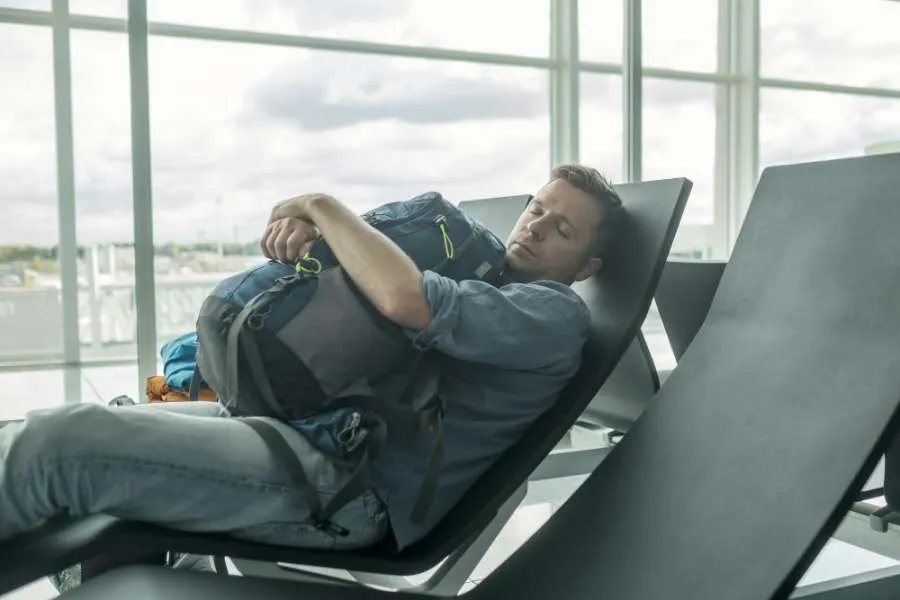
The first flight is behind you. The next one leaves in five, seven or nine hours, and sitting by the gate for all of it makes very little sense. Sorry, let’s put that differently: sitting by the gate for all of it makes almost no sense at all.
At the same time, you do not have to turn the connection into a stressful mini city break. Rushing into town, queuing twice at immigration and watching the clock the whole time can leave you more tired than the flight did.
A long layover works best when you decide early whether it is travel time, rest time or a short stopover. Drifting between all three is what turns a connection into wasted hours.
First, Work Out How Much Time You Really Have
Do not count your layover from landing to departure. That number looks generous on paper, but deplaning, terminal transfers, immigration, baggage collection, a second security check and boarding all eat into it. By the time you subtract those steps, a seven-hour gap can shrink to four hours of genuinely free time.
A few details change the arithmetic completely. Check whether you are travelling on one ticket or separate tickets, whether your bags are checked through to the final destination, whether the next flight leaves from another terminal, and whether you need a visa or entry permission to step outside.
Heathrow, for example, tells connecting passengers that they will pass through security again, and that travellers on separate tickets usually have to clear immigration, collect their baggage and check in from scratch. That single difference can cost two hours.
So, plan around the time you need to be back at the gate, not around the scheduled departure time. Write that moment down somewhere you will see it.
Decide Whether Leaving the Airport Is Actually Worth It
Staying airside is often the calmer option. It usually makes sense when the airport sits far from the city, when immigration queues are unpredictable, when the terminal transfer is complicated, or when the connection is long without being truly long. Bad weather, heavy traffic and simple travel fatigue all point the same way.
Going out can work when the airport has a fast rail or metro link, when entry requirements are straightforward, when your luggage situation is simple, and when the time buffer is genuinely large. Four free hours in the city is a pleasant walk. Two is a sprint.
Be careful with the popular rule that any layover over six hours means leaving the airport. Heathrow itself advises connecting passengers to stay inside, even on long waits, because the process of exiting and returning can swallow the time you hoped to save.
Fix the Basics Before You Start Relaxing
Spend the first twenty minutes on logistics, then forget about them. The list is short:
- confirm the gate and terminal for your next flight
- charge your phone and power bank while you still have a free socket
- refill your water bottle after security
- eat something proper rather than grazing later
- set flight alerts in the airline app
- find the route to your next security check or connection point
- keep your passport and boarding pass somewhere you can reach without unpacking
Once those are done, the rest of the layover belongs to you. That is the point of doing them first.
Build Yourself a Better Waiting Space
Staying airside does not mean sitting in one gate area for hours. Terminals are rarely uniform, and five minutes of walking often brings you to a quieter corner with free seats and a working power point.
Look for a calmer section of the terminal, a lounge, a café away from the busiest gates, a shower facility, or a sleep pod if the wait runs into the night. Heathrow recommends its lounges for exactly this reason: seating, food and space to rest while you wait for a connection. Some lounges sell day passes, so access is not limited to premium tickets.
Comfort improves a layover far more than any attempt to fill every minute. A quiet chair near a socket beats a crowded gate with a long to do list.
Give Yourself One Useful Thing to Do
A connection feels wasted when nothing comes out of it. One small completed task changes that impression, and it does not need to be ambitious.
Pick one of these and stop there:
- sort the photos from the first half of your trip
- answer a few messages you have been putting off
- download offline maps for tomorrow
- tidy up notes or a packing list
- read a chapter
- watch one downloaded episode
- clear a single small work item
What you want to avoid is turning the terminal into a temporary office for six hours. You will board tired, and the work will not be your best anyway.
Keep Some Entertainment Ready on Your Phone
At some point you will stop walking around the terminal, and your phone becomes the easiest way to fill twenty or forty minutes. The trick is preparing it before the trip rather than fighting slow airport Wi-Fi at the gate.
Plenty of options work equally well:
- a downloaded film or series
- a podcast or audiobook
- an ebook on a reading app
- a crossword or puzzle app
- online chess
- casual mobile games
- card or casino-style games, for travellers who already play them
Some games run as standalone apps, while others are accessed through a larger platform or directly in a mobile browser. That distinction matters at an airport, where Wi-Fi quality, roaming costs and battery life can decide which option is more convenient.
Aviamasters is one such title, available through casino apps and mobile browsers. If you already play it during your travel downtime, you can check Aviamasters apps to find a casino app that offers the game or see how the experience compares with playing in your browser
Whatever you choose, download or prepare your entertainment before you are relying on crowded airport Wi-Fi. For gambling-related services, availability can also depend on the laws and location rules where the airport is situated.
Move Around Before the Next Flight
You have just spent hours in an aircraft seat, and another five hours in a plastic chair is not a great follow-up. Walking the length of the terminal costs nothing and makes the next flight more bearable.
Do a couple of laps, find an observation area or a window with a view of the apron, and stretch somewhere out of the way. If you plan to eat, walk first and sit down afterwards rather than collapsing into the nearest food court chair.
None of this is about health advice. It is simply more comfortable, and comfort is the whole point of a long connection.
Eat for the Next Flight, Not Just for the Layover
Think about the flight ahead when you choose your meal. A proper sit-down meal makes sense before a long sector, especially if the next service is a night flight with one small tray at an awkward hour.
Boredom eating is the trap. Buying a snack every hour leaves you full of nothing in particular and short of cash, and then boarding begins just as you finally decide on real food.
Refill your water bottle before you head to the gate, and account for the time zone you are flying into. Eating on the schedule of your destination makes the first day there considerably easier.
If the Layover Is Overnight, Change the Goal Completely
An eight to twelve-hour wait through the night is not an entertainment problem. It is a sleep problem, and the planning should reflect that.
Look at airport hotels, transit hotels inside the secure area, lounges with rest zones, and shower facilities. Pack a sleep mask and earplugs where you can reach them, set two alarms rather than one, and check whether your terminal stays open and accessible overnight. Some airports close sections after the last departure.
On an overnight layover, two or three hours of proper sleep can be worth more than five hours of entertainment. Plan for rest first and treat anything else as a bonus.
Start Moving Again Before You Need To
Begin the return to normal mode about sixty to ninety minutes before you need to be at the gate. Rushing at the end undoes every calm hour that came before it.
Work through a short sequence:
- check the gate again, since it may have changed
- use the bathroom while there is no queue
- refill your water bottle
- pack cables, headphones and power bank back into one place
- confirm your boarding pass is loaded and readable offline
- walk toward the correct concourse with time to spare
Do not wait for the final call. A connection goes wrong in the last twenty minutes far more often than in the first six hours.
The best long layover is not the one where you squeeze in the largest number of activities. It is the one that leaves you calmer, fed, charged and ready for the next flight.
Share: