
What are we really breathing in during a calima in the Canary Islands?

Saharan dust remains the biggest contributor to poor air quality in the Canary Islands, but scientists have also identified industrial pollution reaching the islands from North Africa.
The findings come from AirCanLab, the Canary Islands’ air quality laboratory, which analysed airborne particles collected between 2024 and 2026. Its latest results were presented in La Laguna yesterday (Wednesday).
The research helps explain why the islands can experience high particle readings even when emissions produced locally are relatively low.
What is reaching the islands?
Researchers examined particles known as PM10, which are small enough to be inhaled. Their chemical composition allows scientists to distinguish between desert dust, sea salt, vehicle emissions and pollution carried from elsewhere.
During trade-wind conditions, around 70% of the measured PM10 came from sea salt, 20% from vehicles in the islands and 10% from pollution arriving from outside the archipelago.
Those proportions relate specifically to trade-wind conditions and change when calima brings Saharan dust across the islands.
The laboratory also detected episodes of industrial pollution from Morocco and Algeria, linked to sources including power stations, refineries and fertiliser production.
Why calima makes such a difference
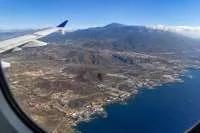
The highest particle concentrations in the study occurred during calima. On 31st March 2026, readings in southern Tenerife and La Gomera reached 996 micrograms per cubic metre of air.
Although desert dust is natural, researchers stress that it can still harm health.
The laboratory’s work will continue under a planned four-year agreement worth €3 million, helping the islands identify pollution sources and prepare for tighter European air quality limits.
Share: