
The Canary Islands end winter with record number of storms linked to climate change
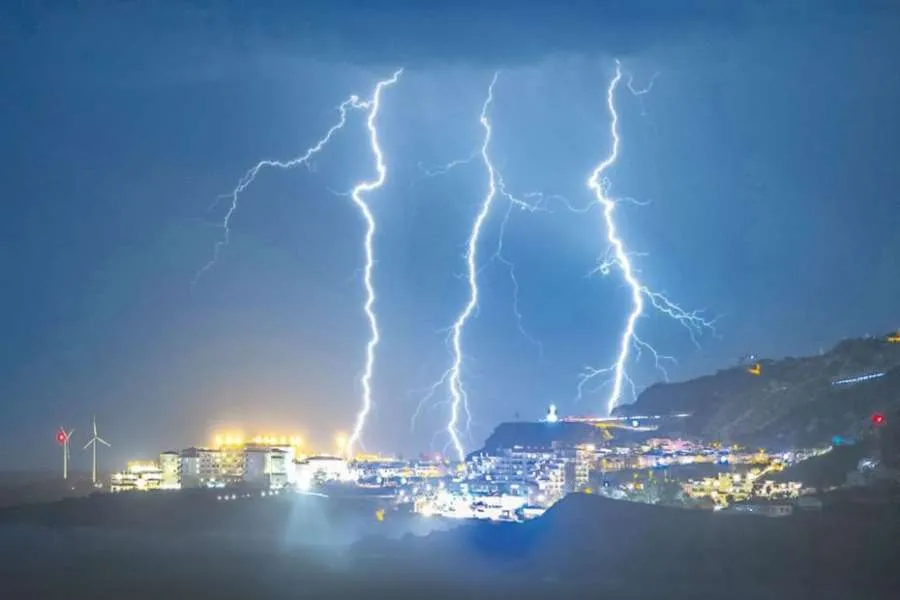
The Canary Islands have closed the 2025–2026 winter season with a record number of storms, a pattern meteorologists say is linked to climate change. According to the State Meteorological Agency (AEMET), the archipelago experienced three high-impact storm systems during the winter, an unprecedented number for the islands.
The agency’s regional delegate in the Canary Islands, David Suárez, explained that the storms arrived from the north rather than the Atlantic, which is the more typical route for weather systems affecting the islands.
A normal but wetter winter overall
Despite the unusual storms, the winter season, measured between 1st December 2025 and 28th February 2026, was described as slightly warm but statistically normal in terms of overall climate conditions.
The average winter temperature across the Canary Islands was 15.4°C, representing a small positive anomaly of 0.2°C.
Rainfall levels were higher than usual. Overall precipitation across the archipelago was around 22% above the seasonal average.
- December recorded 33% more rainfall than normal
- January saw almost double the expected rainfall
- February, however, was dry with only about half of the typical rainfall
Temperatures fluctuated through the season
The early part of winter was notably cooler. Throughout December and most of January, temperatures remained below average.
The coldest anomaly occurred on 13th December, when temperatures were 4.4°C below normal during the passage of Storm Emilia.
However, the pattern shifted in February, when temperatures rose above average. The warmest anomaly was recorded on 23rd February, when temperatures climbed around 5°C above normal during a calima dust episode.
In total, meteorologists recorded:
- 27 low-temperature records in December
- 5 in January
- 13 high-temperature records in February
Calima and sunshine levels
February also brought two significant calima events, with average dust concentrations reaching around 256 micrograms per cubic metre of air.
Meteorologists note that calima episodes at lower altitudes are most common between December and February.
The islands also experienced slightly higher sunshine levels than usual during the winter, with around 641 hours of sunshine recorded.
Sea temperatures were also slightly warmer than average, with an average of 20.36°C.
Spring approaching
Astronomical spring will begin in the Canary Islands at 2:46pm on 20th March.
While this week has brought temperatures between 1°C and 3°C below the seasonal average, forecasters expect conditions to gradually moderate through the remainder of March.
Share: