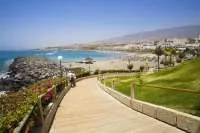

Environmental Groups want Artificial Reef Project stopped in Tenerife
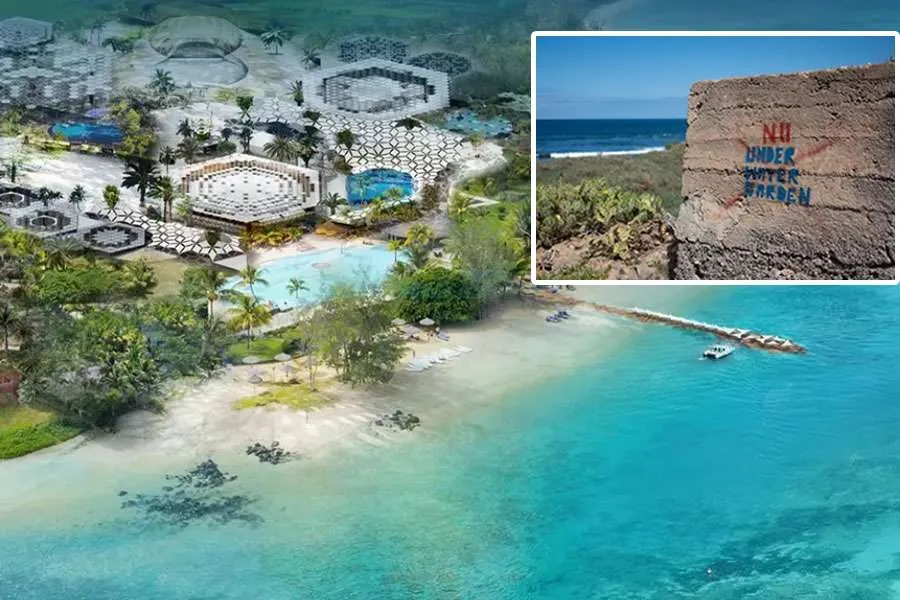
A coalition of environmental organisations and local residents in Tenerife has formally called on the coastal authorities to reject plans to install artificial reefs off the coast of Guía de Isora, warning the project could threaten one of the last unspoilt stretches of shoreline in the island’s southwest coast.
The proposal, promoted by Underwater Gardens International, involves the installation of artificial reef structures offshore. It is part of a wider tourism project known as “Underwater Gardens Park Tenerife”, which also includes a separate land-based theme park project currently being processed independently.
Groups including Greenpeace and the Salvar Punta Blanca platform, alongside 34 social organisations, have submitted formal objections during the public consultation period. They are urging the Directorate General for Coasts and Maritime Space Management of the Canary Islands to refuse the application.
Protected marine area at centre of dispute
Campaigners argue that the proposed works would take place within the Teno-Rasca Marine Strip Special Area of Conservation (ZEC), part of the EU’s Natura 2000 network. The area is considered to have high ecological value and is home to protected species such as angel sharks, green turtles and black coral.
According to the objections filed, although the project is presented as a temporary scientific marine restoration initiative under the “Ocean Citizen” programme, it would in practice involve the permanent installation of artificial reefs on sandy seabeds regarded as environmentally sensitive.
Environmental groups claim there is insufficient justification for intervening in what they describe as a habitat of significant natural value.
Project details
The application submitted to the coastal authorities covers the occupation of 11,691 square metres of marine platform. Plans include the installation of 86 artificial reef modules, arranged in 16 groupings plus one floating reef, as well as three monitoring stations.
The structures would be distributed across shallow, mesophotic (mid-depth) and deeper marine zones. In total, the artificial reef modules would occupy 50.98 cubic metres.
Opponents argue that the marine component cannot be viewed in isolation. They maintain it forms part of a broader tourism-led development, the Underwater Gardens Park Tenerife project, whose land-based section was previously classified as a project of island interest in 2022.
Allegations of project fragmentation
Environmental organisations have raised concerns that dividing the initiative into separate land and marine applications may be an attempt to avoid a comprehensive environmental impact assessment. They suggest that this administrative separation could amount to an abuse of process.
They have also questioned the use of European funding for what they describe as a commercially driven tourism venture, potentially centred on recreational diving experiences and so-called “underwater gardening”.
Criticism has also been directed at the scientific basis of the proposal. Campaigners argue that some of the claims made in the documentation lack robust supporting studies, and that the underlying causes of environmental degradation in the area are not properly addressed.
Furthermore, they warn that the project could increase visitor pressure in a zone already heavily impacted by tourism activity.
Accusations of “greenwashing”
Opponents have described the proposal as “greenwashing”, arguing that environmental restoration language is being used to promote a tourism infrastructure project within a protected marine area.
The Salvar Punta Blanca platform, which brings together 34 organisations, says it has gathered more than 62,000 signatures internationally in opposition to the scheme. Campaigners insist that Punta Blanca should remain a shared natural heritage site rather than be transformed into a tourism attraction.
In their submissions, the groups conclude that the Ocean Citizen project, as currently designed, poses a risk to the ecological integrity of the Teno-Rasca Special Area of Conservation and are calling on the authorities to prioritise environmental protection over private economic interests.
Share: