
New study reveals Canary Islands now face Calima on 146 days a year
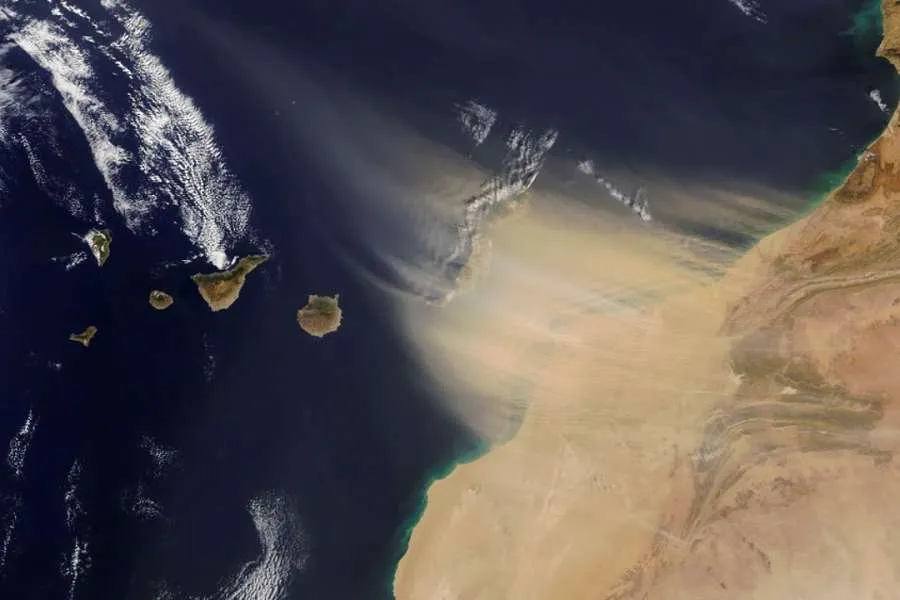
The Canary Islands are now affected by calima on at least 146 days every year, the equivalent of almost five months, according to a major new scientific study that warns Saharan dust events are becoming more frequent across southern Europe.
The research, led by the Paul Scherrer Institute in Switzerland in collaboration with Spain's Institute of Environmental Assessment and Water Research (IDAEA-CSIC), found that while pollution from traffic, industry and households has fallen thanks to stricter environmental regulations, airborne desert dust has increased by 10% to 25% over the past decade.
According to the study, calima now affects the Canary Islands on around 40% of all days each year, compared with around 35% in southern mainland Spain and 25–30% in the country's northeast.
Climate change driving increase
Researchers say the rise is being caused by changes in atmospheric circulation that are drawing more African air masses towards Europe, combined with increasing drought across parts of North Africa, which is generating more desert dust.
Lead researcher Kaspar Dällenbach said greenhouse gas emissions and global warming are contributing to the expansion of desert regions, making intense dust episodes more likely.
Canary Islands air quality expert Xavier Querol explained that although the trade winds usually carry Saharan dust towards the Caribbean, certain weather patterns redirect it towards the Canary Islands and mainland Spain.
Record-breaking "super calima" events
The study highlights that the exceptionally intense calima episodes recorded between 2020 and 2022 were the strongest since air quality monitoring began.
During some of those events, dust concentrations in the Canary Islands reached levels far beyond those normally associated with calima. While traditional episodes typically produce PM10 particle concentrations of 200 to 400 micrograms per cubic metre, the "super calimas" recorded values between 600 and 1,840 micrograms, with the highest reading measured in Gran Canaria.
Health concerns
Scientists are increasingly concerned about the impact of more frequent calima events on public health.
Studies cited in the report link high concentrations of Saharan dust with increased hospital admissions and higher rates of death from heart attacks and respiratory illnesses during calima episodes.
Research carried out by the Hospital Universitario de Canarias found that patients admitted with heart failure had significantly worse outcomes if they had been exposed to high levels of Saharan dust before being hospitalised.
Health experts advise people with asthma, COPD, heart disease and other respiratory conditions to monitor calima forecasts issued by AEMET and the Canary Islands Government, as exposure can cause coughing, breathing difficulties, chest discomfort and increased susceptibility to respiratory infections.
Share: