
Tenerife’s plants could hold the secret to developing new medicines
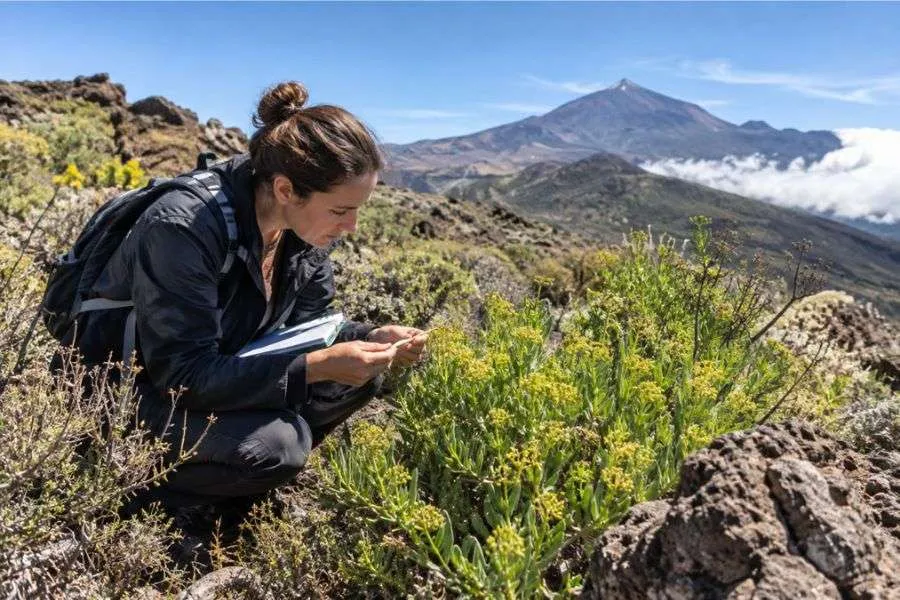
The extraordinary plant life of Tenerife is being investigated for naturally occurring compounds that could one day contribute to the development of new medicines and other valuable products.
The project brings together the Tenerife Cabildo and Spain's Consejo Superior de Investigaciones Científicas (CSIC) through the Instituto de Productos Naturales y Agrobiología (IPNA).
Known as the Librería de Productos Naturales de Tenerife, or LiPNaT, the initiative is creating a scientific library primarily containing natural products and compounds derived from the plant biodiversity of Tenerife and the wider Canary Islands.
The concept takes advantage of one of the archipelago's greatest natural assets: its unusual and highly diverse flora.
Plants produce a huge range of chemical substances as part of their natural survival mechanisms, helping them respond to drought, pests, competition and other environmental pressures.
Scientists can isolate and study these compounds to determine whether they possess properties with potential scientific, medical or commercial applications.
The objective is not to claim that a particular Tenerife plant has already produced a new medicine.
Instead, researchers are creating a structured collection of compounds that can be studied by scientists and potentially used as the starting point for future research and development.
The Cabildo has committed €1.2 million to the project under a formal agreement with the CSIC.
The funding is scheduled across the first two years of the latest phase of the agreement, with €600,000 allocated in each of 2027 and 2028.
It will help pay for highly qualified researchers and technical staff as well as laboratory materials, specialist services and other costs associated with the scientific work.
The CSIC is also contributing personnel, laboratory facilities, specialist equipment and other resources.
The total value of the resources committed by both institutions under the agreement is approximately €1.88 million.
Researchers will not simply collect plant material. The work includes botanical identification, genetic and genomic analysis, chemical isolation and purification, structural analysis of compounds and the organisation of samples into the scientific library.
Plant specimens connected with the research will also be preserved under controlled conditions, providing a lasting scientific record of the material studied.
A particularly important element is making the resulting collection useful beyond the initial research team.
The library is intended to support high-quality scientific research while allowing knowledge to be transferred towards businesses and other organisations interested in developing products with added value.
That means promising compounds identified during the work could potentially become the subject of further research.
Tenerife and the wider Canary Islands are internationally recognised for their biodiversity and high number of endemic species, created in part by the islands' geographic isolation and dramatically different habitats.
The LiPNaT project aims to investigate that natural heritage at the molecular level.
Whether any individual compound ultimately becomes part of a medicine remains a question for years of scientific testing and development.
But the project means Tenerife's extraordinary flora will increasingly be examined not only for what grows above ground, but for the potentially useful chemistry hidden inside it.
Share: