
Gran Canaria Stadium Upgrade Approved for 2030 World Cup
The redevelopment of the Estadio de Gran Canaria has taken a major step forward after Las Palmas City Council formally approved the urban planning compliance of the expansion and full refurbishment project. The decision clears a key hurdle in the bid for the stadium to serve as a venue for the FIFA World Cup 2030.
The resolution, issued by the city’s Directorate General for Building and Activities, confirms that the project — promoted by the Island Sports Institute — complies with current planning regulations within the Siete Palmas Sports City area. The administrative process began on 10th March 2026.
Capacity boost to meet FIFA standards
The plans include a comprehensive modernisation of the stadium, increasing capacity from the current 32,418 seats to approximately 41,854.
This expansion will be achieved through a reconfiguration of the stands and an overall optimisation of interior spaces, bringing the venue in line with FIFA’s international requirements for hosting World Cup matches.
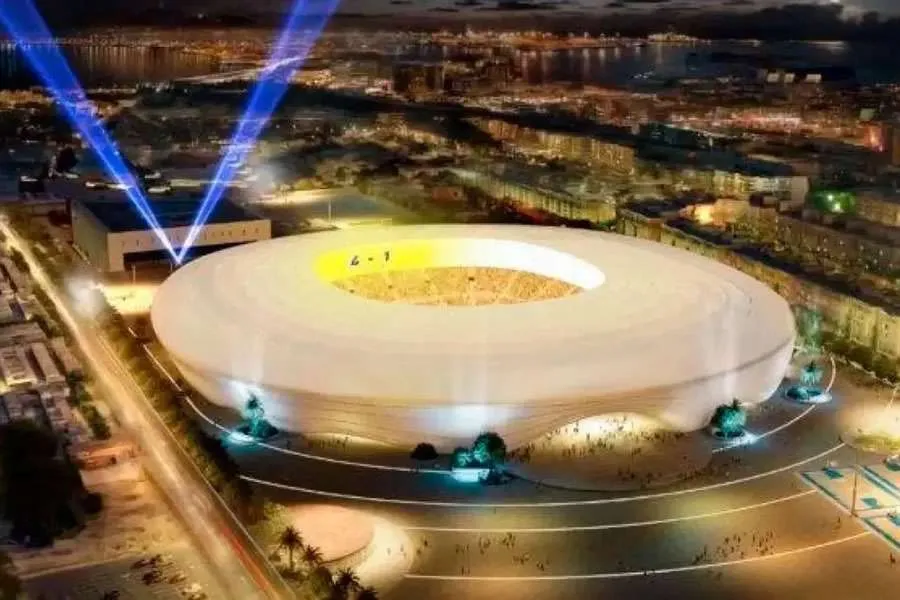
One of the most striking features of the proposal is the addition of a new roof with a “bicycle wheel” design. The lightweight, cable-supported structure is intended to improve spectator protection while enhancing the stadium’s architectural profile.
The façade will also incorporate traditional Canarian pintadera patterns, strengthening the cultural identity of the venue and its connection to the island.
Phased construction to allow continued use
Work will be carried out in stages, allowing partial sporting activity to continue during the construction period. This phased approach aims to minimise disruption while the transformation is underway.
The project also reorganises parking facilities, with 597 spaces planned — potentially rising to 623 — along with access to a nearby car park providing at least 3,500 additional spaces for major events.
A multi-purpose venue beyond football
Beyond its role as a football stadium, the upgraded facility is designed as a multi-use complex. Plans include a Sports Innovation Hub, training and digital spaces, a museum, restaurant and areas for cultural, economic and institutional events.
Sustainability is another core component of the redevelopment. The project incorporates renewable energy solutions, including photovoltaic and thermal systems, as well as aerothermal and geothermal technologies, aimed at reducing environmental impact and improving energy efficiency.
The council’s ruling concludes that the project fully complies with the planning framework under the general system designation SG-13 and does not alter the approved land uses for the area.
With planning approval secured, the transformation of the stadium moves closer to positioning Gran Canaria as a host destination on football’s biggest global stage in 2030.
Share: